

 EN
EN
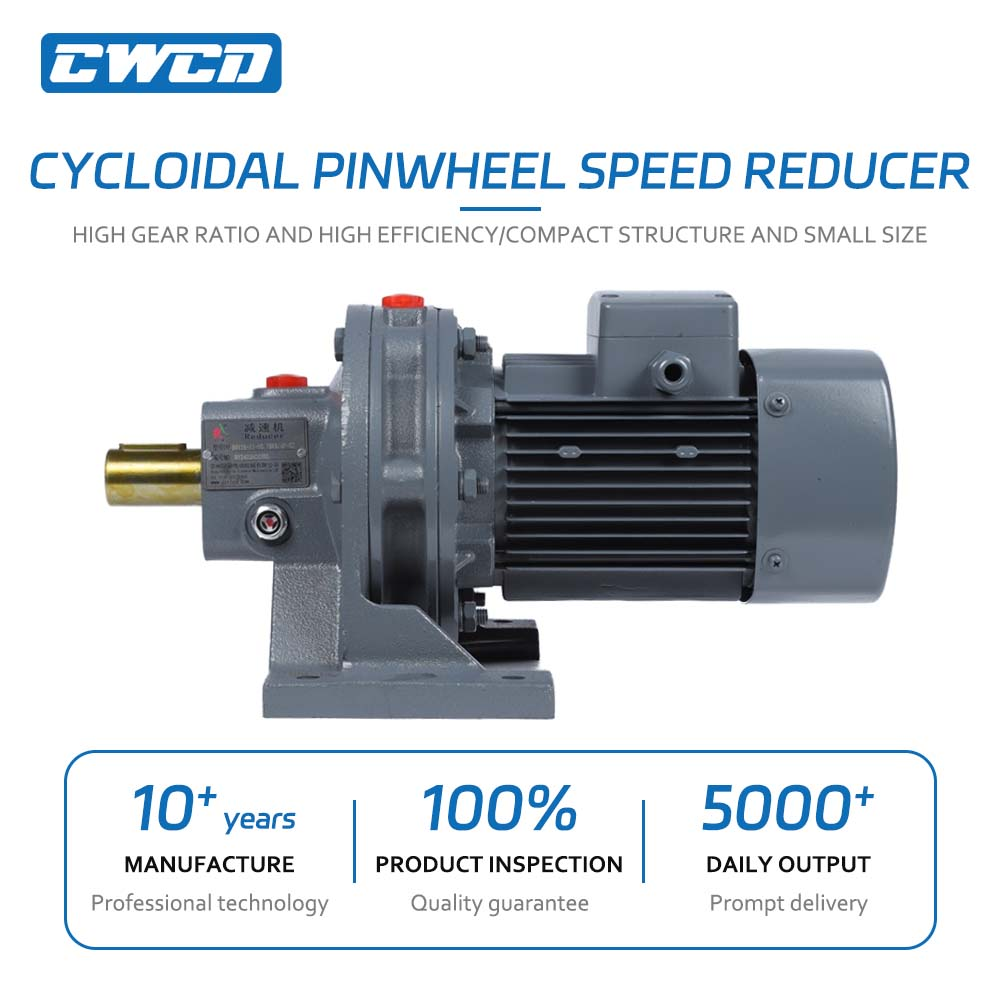
What Is a Gear Reducer? Core Function and Mechanical Purpose
Gear reducer as a fundamental power transmission device
Gear reducers are basically mechanical devices that transmit power between different parts of machinery. They work by using gears that fit together just right to change the speed and force of rotation. These components act as important links in industrial equipment, helping move things along while also fine tuning how much power gets transferred. Built tough enough to handle all sorts of stress, gear reducers can be found everywhere from factory conveyors moving products down assembly lines to massive machines used in steel production. When proper torque needs to get from one part of a machine to another without losing strength or breaking down, these reducers make sure everything keeps running smoothly even under tough conditions.
How gear reducers enable motor-load matching through speed reduction and torque multiplication
Gear reducers match up motors with their workloads based on how speed and torque relate inversely according to basic physics principles. When a small drive gear meshes with a bigger driven gear, what happens is straightforward physics: the input spins slower but delivers much stronger force at the output end, though some energy gets lost along the way due to friction. Take a common 5:1 reduction ratio for instance. That setup basically multiplies torque five times over while slowing things down to just 20% of what came out of the motor originally. The result? Smaller motors can handle heavy duty tasks without getting overloaded, which saves power in the long run. Heat buildup is still a big concern though. All those efficiency losses turn into actual warmth inside the system, especially when dealing with high ratio reductions. Good lubrication and proper cooling become absolutely critical if these systems are going to keep running smoothly over time.
How Gear Reducers Work: Gear Ratios, Energy Conservation, and Performance Trade-offs
The physics of angular velocity transformation and inverse torque-speed relationship
Gear reducers work by changing how fast things spin around, basically controlled by the ratio between different sized gears. When a small gear turns a bigger one, it slows down rotation but makes more force at the same time, kind of like when someone shifts gears on a bike to go uphill easier. In theory, what goes in should come out exactly the same, but in reality there's always some loss somewhere. Most gear reducer stages manage about 90 to almost 100 percent efficiency depending on their design specifics. The helical type usually does really well with efficiencies hitting around 95 to nearly perfect 98 percent marks. Worm gears aren't as good though, they tend to fall into the 70 to maybe 85 percent range because of all that sliding action which creates extra friction and heat along the way.
Thermal and efficiency implications of high-ratio gear reduction
When gears have extreme reduction ratios, they create serious heat problems because every stage loses about 2 to 5 percent of the power as heat energy. Take a 100:1 reducer for example it can easily hit over 90 degrees Celsius if there's no active cooling system in place, which means the lubricants start breaking down faster and parts wear out quicker than normal. To handle these issues, engineers often go for specific gear designs like helical or planetary systems that are naturally more efficient. They also build housings that help spread out the heat better or install fans to blow cool air across hot spots. Sometimes they just make components bigger than needed so they can expand safely when things get warm. From what we see in actual field tests, any reducer with a ratio above 60:1 usually needs a TEFC Totally Enclosed Fan Cooled design to keep temperatures within safe limits during long periods of operation.
Major Gear Reducer Types: Design, Kinematics, and Application Fit
Worm, helical, and planetary gear reducers — comparative mechanics and load-handling profiles
Three primary architectures dominate industrial applications:
- Worm reducers use a screw-like worm engaging a wheel to deliver right-angle power transfer, achieving ratios up to 100:1. Sliding contact enables self-locking but limits efficiency to 50–70%, restricting use in continuous-duty applications.
- Helical reducers employ angled teeth on parallel shafts for smooth, quiet operation and efficiencies above 95%. Gradual tooth engagement distributes load across multiple contact points—ideal for high-torque, 24/7 conveyor systems.
- Planetary reducers distribute force through sun-planet-ring gear arrangements. Their compact co-axial design achieves >97% efficiency and exceptional shock-load tolerance—making them optimal for robotics joint actuators subject to abrupt directional changes.
In-line vs. right-angle configurations: space, alignment, and dynamic load considerations
How components are oriented makes all the difference when it comes to how well systems integrate and last over time. Inline reducers line up input and output shafts straight through, which saves precious floor space especially valuable on tight packaging lines. But there's a catch - these need spot-on shaft alignment. Even something as small as half a millimeter off can cause bearing wear to jump by four times what it should be in factories. Plus, those inline setups pass along torsional vibrations right into whatever equipment they're connected to. For applications where perfect alignment isn't always possible, right angle reducers with worm gears or bevel helical designs come in handy. They bend power direction at 90 degrees and handle some misalignment better than their inline counterparts. Still worth noting though, these types put extra stress on output bearings and take up more room overall. When choosing between options, engineers have to balance available space against how sensitive the system is to vibrations. And don't forget isolation mounts become pretty much mandatory for any right angle reducer dealing with sudden load spikes over 150% of normal operating torque levels.
Selecting the Right Gear Reducer: Key Mechanical Parameters and Real-World Sizing Logic
Proper selection hinges on aligning mechanical parameters with operational demands. Begin by calculating required output torque—including safety factors for shock loads—and input speed, then determine the necessary reduction ratio:
Ratio = Input Speed (RPM) / Output Speed (RPM).
Critical parameters include:
- Torque capacity: Must exceed peak application torque, including dynamic and start-up loads
- Thermal limits: Verify heat dissipation capability matches duty cycle—especially for high-ratio or continuous-operation applications
- Efficiency: Helical units typically achieve ≥95% efficiency; worm gears range from 50–90%, affecting long-term energy cost and thermal design
- Backlash tolerance: Precision motion control requires ≤10 arc-minutes; general industrial applications typically accept 15–30 arc-minutes
Real-world sizing applies service factors: multiply calculated torque by 1.5–2.0 for heavy machinery to accommodate unexpected loads. For continuous operation, derate torque capacity by 20% to prevent overheating. Always verify mounting dimensions, shaft configurations, and interface compatibility before finalizing specifications.