

 EN
EN
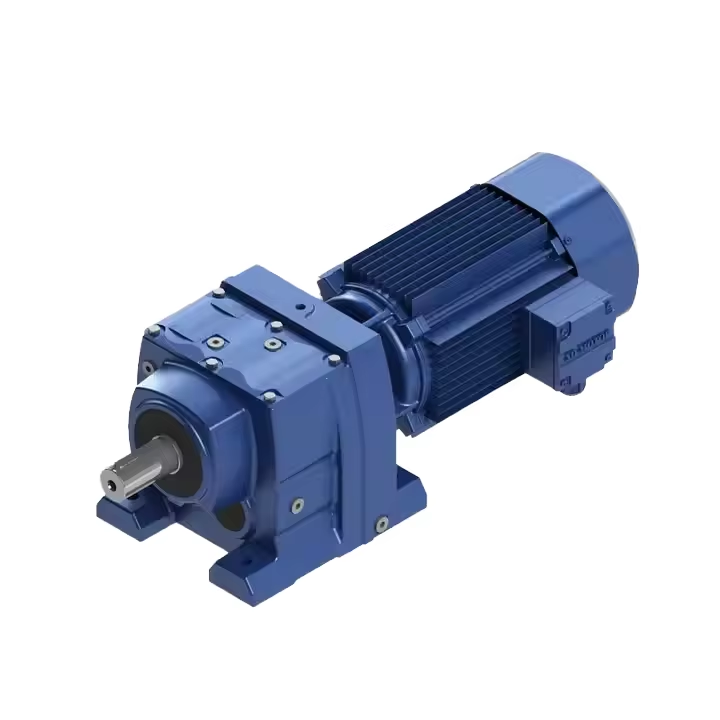
Why Compound Planetary Gearboxes Are Redefining Power Density
Compound planetary gearboxes pack a lot of power into small spaces thanks to their multi stage gearing system which actually multiplies torque. The way these gears are arranged spreads out the workload among several planet gears at once. What this means is they can transmit much more torque for their size compared to standard gearbox setups. Plus, since the load gets shared around, each part doesn't get worn down so fast. Efficiency stays pretty good too, sometimes hitting over 95 percent when used in things like robotics or aerospace where precision matters most. Manufacturers love this because it saves space without sacrificing performance.
When compared to alternative gearbox types, the advantages become clear:
| Metric | Planetary Gearbox | Helical Gearbox | Worm Gearbox |
|---|---|---|---|
| Torque Density | Very High | Moderate-High | Moderate |
| Efficiency | 95-98% | 92-96% | 75-85% |
| Space Required | Compact | Larger Offset | Compact Lengthwise |
These characteristics make compound planetary gear systems ideal for weight-sensitive industries like aerospace and robotics. One global manufacturer recently reported a 40% volume reduction in new-generation actuators by transitioning to multi-stage planetary designs proving why this architecture is revolutionizing power transmission engineering.
Compound Planetary Gearboxes in Electric Vehicles and Robotics
High-torque, compact integration in EV drive units (e.g., Tesla IDU)
Many electric vehicles now use complex planetary gear setups to deal with torque issues when space is tight inside the wheel wells. When engineers stack several planetary gears together, they can boost torque output anywhere from 4 to 6 times over what traditional transmission systems offer, all while taking up about 40 percent less room. The way these gears are arranged lets them connect directly to the motor shaft, which means no need for extra couplings. This saves around 15% on drivetrain weight too, and still keeps mechanical efficiency above 97%. Some major EV makers have actually seen their cars last about 23% longer on a single charge in city driving conditions because these compact designs cut down on rotational inertia so much.
Precision actuation and backdrivability in legged robots and collaborative exoskeletons
In robotics, engineers take advantage of the almost non-existent backlash found in compound planetary gear setups. These triple stage reducers can get down to motion resolutions under 0.05 degrees while still allowing backdrivability, which is really important for systems that need to sense forces when interacting with humans. Take collaborative exoskeletons for instance they can pick up on operators' movements in just 5 milliseconds thanks to this kind of precision. Meanwhile legged robots stay balanced on rough ground because they distribute torque across their planetary gear clusters. Another benefit comes from how these gears spread out the workload naturally across several planet gears. This actually makes them last 3 to 5 times longer than regular spur gears in joints that go through lots of cycles, something manufacturers definitely care about when building durable robotic systems.
Pushing Boundaries: Aerospace, Medical, and Renewable Energy Applications
Radiation-tolerant compound planetary systems for satellite mechanisms
When spacecraft operate in those harsh radiation environments up there, their mechanical parts need to be rock solid reliable. That's where these special compound planetary gears come into play. They handle super important tasks such as unfolding solar panels and pointing antennas just right. What makes them stand out is how they keep working accurately even after getting bombarded by cosmic rays that would wreck normal equipment over time. The real kicker? These gears pack a lot of power into small spaces. Every extra gram matters because launching stuff to geostationary orbit runs around $20k per kilogram. And let's not forget about the backup systems built into their design. With multiple torque paths available, missions can keep going even if one part fails somewhere along the way.
Miniaturized, high-reliability designs for implantable medical devices
The medical field has started using compound planetary gears in ways that save lives. These tiny mechanical systems show up in things like implantable insulin pumps and those fancy surgical robots doctors use today. What makes them special is their concentric design which can boost torque by as much as 300 times while fitting inside something smaller than a dime. This kind of power in such small packages opens doors to all sorts of minimally invasive treatments we couldn't do before. Medical devices need to be super reliable too - talking about 99.999% reliability according to strict FDA rules for class III devices. Because of how these gears distribute loads across multiple stages, there's no single point where everything might fail. That means these devices can keep running nonstop for more than five years without needing any maintenance work at all. Pretty impressive when thinking about how important this is for stuff like brain stimulators or parts of artificial hearts that have to function perfectly day after day.