

 EN
EN
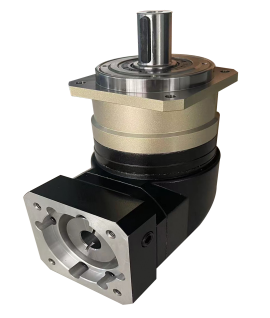
Precision Motion Control: Low Backlash and Sub-Arcminute Repeatability
How Planetary Gearheads Achieve <1 Arcmin Backlash for Robotic Positioning Accuracy
The secret behind planetary gearheads achieving such incredibly low backlash, sometimes less than 1 arcminute, lies in how they engage multiple teeth at once across those three planet gears. The way these gears distribute force evenly helps reduce any wobble between the input and output shafts. Manufacturers take it even further by grinding helical teeth with precision and using preloaded tapered bearings that basically eliminate any unwanted movement down to sub-arcminute levels. To put this into perspective, just 1 arcminute of backlash can lead to almost 3 mm positioning errors when working at a 10 meter radius distance. That kind of inaccuracy would be disastrous for things like surgical robots or delicate microassembly work where every millimeter counts. Today's manufacturing techniques maintain tooth profiles within 5 microns tolerance range, which allows for repeatable accuracy around plus or minus 0.01 degrees. This level of precision is what makes them indispensable in industries dealing with wafer handling operations and high precision laser cutting applications.
Backlash vs. System-Level Accuracy in Closed-Loop Servo Robotics
Encoders do help with backlash issues in closed loop servo systems, but when there's too much play in the gears, controllers tend to overcompensate. This causes unwanted oscillations and slows down system responses significantly. According to the latest Robotics Precision Report from 2024, cutting backlash down from 5 arcminutes to just 1 made a huge difference in delta robots doing pick and place tasks, slashing positioning errors by nearly two thirds. For those working with low backlash planetary gearheads, the benefits are clear. These components keep motor feedback aligned much better with actual joint movement, which is especially important for maintaining precision at high speeds. The result? Much cleaner contours and surfaces. And let's not forget about CNC machining where these improvements matter most. When machines change direction, they make fewer mistakes now, leading to surface finishes that are up to 35% better quality overall.
High Torque Density and Space Efficiency in Robotic Joints
The joints on robots require power transmission systems that fit into tight spaces while still handling substantial torque demands. Planetary gearheads are pretty good at solving this problem because they spread out the load across several meshing points. These gears can deliver about 40 to 60 percent more torque density compared to other options like harmonic or cycloidal drives when looking at similar sized packages. What makes them work so well is how they distribute forces along the same axis and have those teeth designed for maximum contact. This means engineers can install them right inside cramped joint areas without having to sacrifice any performance characteristics.
Planetary Gearhead Torque-to-Volume Advantages Over Harmonic and Cycloidal Alternatives
The torque density advantage of planetary designs arises from fundamental mechanical differences:
- Harmonic drives rely on elastic deformation, capping peak torque despite low backlash
- Cycloidal reducers deliver high reduction ratios but operate at lower efficiency (75–85% vs. planetary’s 95–98%)
- Planetary configurations leverage parallel load paths for balanced stress distribution
A comparative analysis of industrial reducers confirms that planetary systems deliver 2.1× higher torque than similarly sized cycloidal units under shock-load conditions.
Real-World Impact: Compact Wrist Modules with 2.3× Higher Torque in Collaborative Robots
In collaborative robots (cobots), planetary gearheads enable 2.3× higher torque within identical wrist joint form factors. This space efficiency supports:
- Higher-payload capability without enlarging joint geometry
- Reduced rotational inertia for smoother, safer human-robot interaction
- Extended MTBF through even load sharing across gear meshes
These gains address urgent industry needs for stronger yet smaller automation components—especially in electronics assembly, where wrist real estate remains critically constrained.
Seamless Integration with Servo Motors for Dynamic Performance
Inertial Matching and Bandwidth Optimization in High-Speed Pick-and-Place Applications
Planetary gearheads help match inertia between servo motors and robotic arms, which is really important for how fast these systems can react in high speed pick and place operations. When they bring down those reflected inertia ratios to under 10:1, there's much less overshooting when the arm makes quick direction changes. This lets delta robots in packaging lines complete cycles in less than 0.3 seconds flat. What's more, their strong torsional rigidity means almost no phase lag, so the path stays accurate even when accelerating past 15G forces. Frameless servo setups that integrate directly into the system get rid of coupling compliance issues, giving about 40% better control bandwidth compared to old school coupling methods. All together, this combination allows for handling delicate microelectronics components at over 200 cycles per minute, plus keeps motor temps around 22 degrees Celsius cooler. And because of the compact coaxial design, installation becomes much easier in tight spaces where robotic joints need to fit.
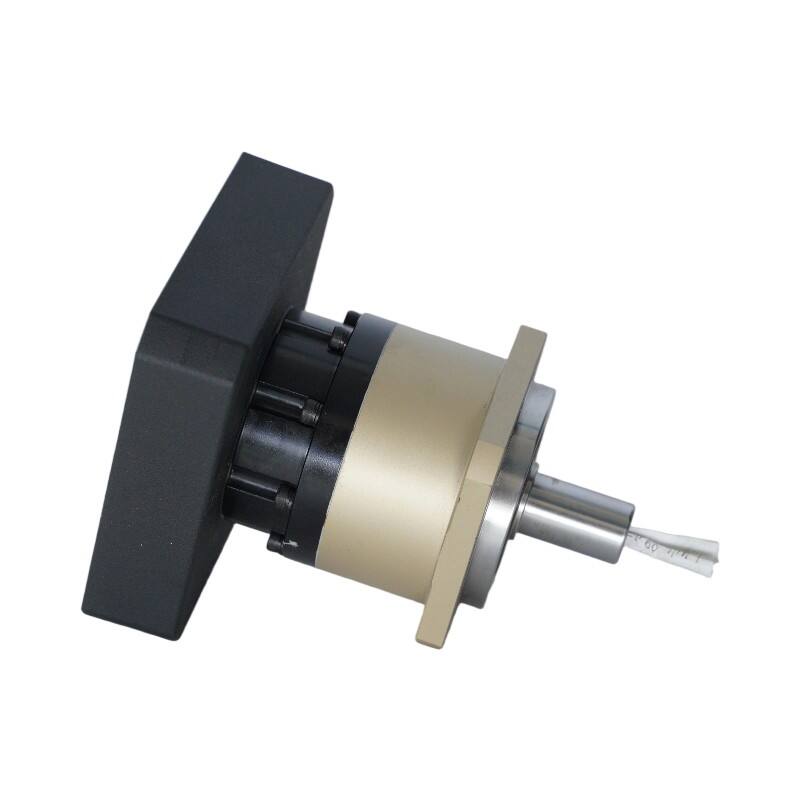
Long-Term Reliability and Reduced Maintenance in Industrial Robotics
MTBF Validation: Planetary Gearheads Outperform Spur Gear Solutions in 10,000-Hour Shifts
When it comes to industrial robotics applications where reliability matters most, planetary gearheads tend to last much longer than alternatives. Tests show these systems can run continuously for over 20,000 hours before needing maintenance, which is almost twice what we see from similar spur gear setups. The secret lies in how they're built. These gearheads have multiple points of contact that spread out the stress during operation. This means the wear on individual gear teeth gets reduced by around two thirds when compared to standard single stage spur gears according to findings published in the Industrial Robotics Reliability Report back in 2023. For manufacturers dealing with heavy duty automation tasks day after day, this kind of durability makes all the difference.
The impact is quantifiable:
| Performance Metric | Planetary Gearhead | Spur Gear |
|---|---|---|
| MTBF (10,000-hr shifts) | >20,000 hours | <11,000 hours |
| Maintenance Cycles | 3–4 year intervals | 6–12 months |
| Downtime Cost Reduction | ~$740k annually | Baseline |
Fewer bearing replacements and lubrication events translate to 47% lower maintenance costs over five years. In automotive assembly and electronics manufacturing—where unplanned downtime exceeds $200k/hour—planetary gearheads eliminate up to 87% of unscheduled maintenance in 3-shift pick-and-place operations.