

 EN
EN
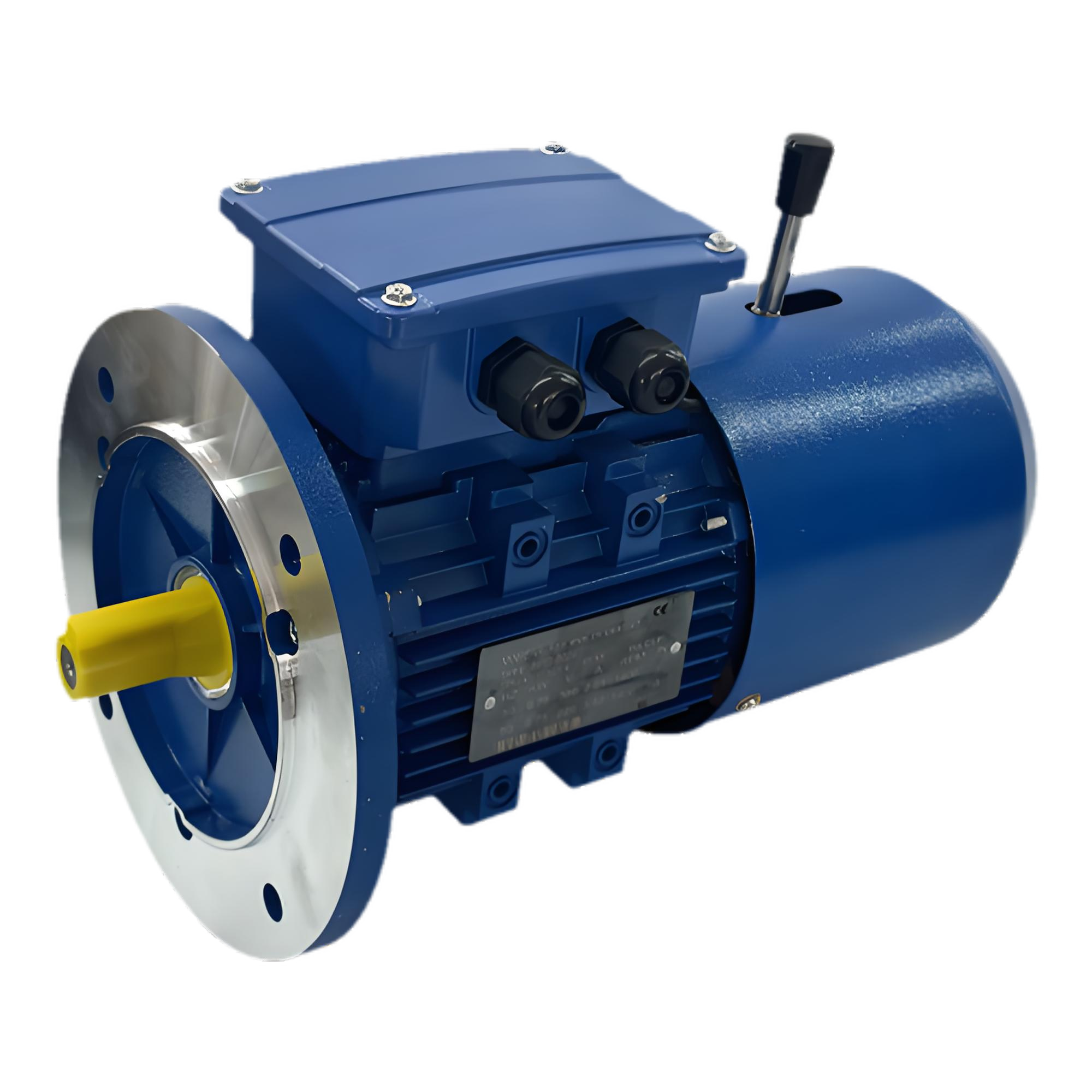
What Makes a Servo Motor Essential for Sub-Micron Precision?
Closed-loop feedback: How real-time error correction enables ±0.001° repeatability and <5 µm positioning accuracy
Servo motors reach incredible levels of precision thanks to their closed loop control systems which constantly check positions using those fancy high resolution encoders and fix any errors before they become problems. Imagine telling a motor to move exactly 3 microns, yet it can spot when there's even a tiny 0.5 micron overshoot and adjust the stator current almost instantly. What makes these motors so special? They deliver consistent rotational accuracy down to plus or minus 0.001 degrees and linear positioning below 5 microns. This kind of precision matters a lot for things like aligning semiconductor wafers or putting together delicate optical components where even the smallest misalignment can ruin everything. The secret sauce behind all this lies in encoder resolution. Those 24 bit encoders give about 16.7 million counts per full rotation, allowing for adjustments at the micro radian level something traditional open loop systems just cant do no matter how hard they try.
Beyond resolution: Why mechanical rigidity, thermal management, and control loop bandwidth are equally critical to system-level precision
Encoder resolution alone doesn’t guarantee precision—three interdependent physical and control factors define real-world performance:
- Mechanical rigidity: Frame or stator flexure under load can introduce 10–15 µm positional drift in multi-axis robotic arms. Reinforced laminated stator cores reduce compliance-induced errors by up to 60%, as validated in peer-reviewed studies on high-precision motion systems (Precision Engineering, 2023).
- Thermal management: Copper winding resistance rises with temperature, causing ~0.4% torque variation per °C—enough to shift alignment in extended lithography runs. Liquid-cooled rotors maintain thermal stability within ±1°C, preserving magnetic flux consistency and torque fidelity.
- Control loop bandwidth: Servo drives with ≥2 kHz update rates suppress vibration disturbances 50% faster than 500 Hz systems, achieving settling times under 10 ms for micron-scale moves—essential for rapid, stable trajectory tracking.
| Performance Factor | Low-Precision Impact | High-Precision Solution | Error Reduction |
|---|---|---|---|
| Structural Flexure | Up to 15 µm drift | Reinforced stator cores | 40–60% |
| Thermal Drift | 0.4% torque/°C | Liquid-cooled rotors | ±0.02% stability |
| Control Latency | 20 ms settling | 2 kHz+ PID loops | 90% faster correction |
In multi-axis systems, errors compound geometrically—so neglecting any one factor undermines the entire precision architecture.
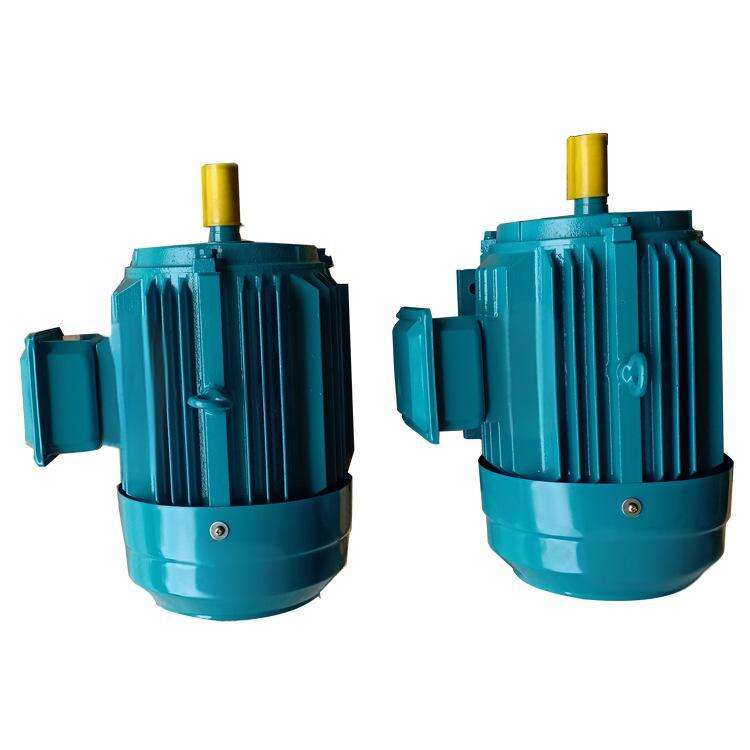
Servo Motor vs. Stepper Motor: When Precision Demands Closed-Loop Control
What really sets them apart comes down to how they handle control. Servo motors work with built-in encoders and constantly adjust using PID tuning to keep track of position and torque at all times. Stepper motors take a different approach altogether since they run in open loop mode without any kind of feedback system to catch when steps get missed. When things start getting intense with dynamic loads or rapid acceleration - which happens a lot in precision automation applications - stepper motors can accumulate positioning errors over time. These small mistakes add up and eventually mess with those super fine sub-micron processes we're trying to maintain. Sure, stepper motors do have their place where budget matters most and the risks are lower, such as simple conveyor belt indexing operations. But when it comes to performance, servos just shine brighter. They can spin much faster than steppers, sometimes reaching speeds five times higher. Plus, servos maintain steady torque throughout their entire range of operation and respond almost instantly within fractions of a millisecond.
| Control Factor | Servo Motor Advantage | Stepper Limitation |
|---|---|---|
| Error Correction | Continuous via PID tuning | None (open-loop) |
| Torque Consistency | Maintains 95%+ rated torque at RPM | Drops >80% beyond 600 RPM |
| Dynamic Response | <1 ms adjustment latency | Prone to resonance oscillations |
This architectural superiority is why servo-driven gantries dominate semiconductor lithography—where nanometer-scale trajectory fidelity directly impacts yield. The choice isn’t merely technical—it reflects operational priorities: when error immunity, repeatability, and dynamic responsiveness are non-negotiable, closed-loop servo control becomes essential.